Canada day citizenship ceremony…

I attended a citizenship ceremony for the first time on Canada Day. I was surprised how emotional it can be just watching (and photographing) the proceedings. For the people getting their citizenship it must be a really emotional day.

From a photography stand point it can be a challenge to photograph events inside a large indoor space (one of the halls at Canada Place in this case) with low light, different colors of light, crowds of people getting in your shots as well as other photographers and media people jockeying for position to get good images.

On the plus side most everyone is in a good mood. And hey there was cake! And when there is cake it’s usually going to be a good event.

I hope everyone had a Happy Canada Day!

Fraser River Marine Pilots…

I attended a really interesting presentation at the Port of Vancouver’s Delta Community Office given by Captain Mike Armstrong, who has been a Fraser River Pilot for 15 years and is one of only 8 Fraser River Pilots that work the Fraser River. There are two types of marine pilots, Coastal and River, both guide ships through local waters to and from a port. Captain Mike talked about many different aspects of becoming and being a Fraser River pilot…

To become a pilot, either River or Coastal is not easy. You first need a lot of experience on the waters in which you hope to work before you can even apply to become a marine pilot. Then there is the extensive 3 part testing program that must be completed. The testing consists of a written general knowledge test, a written local knowledge test and then an extensive oral exam. You must pass (70%+) each of the tests before moving on to the next test…fail one and you do not move on to the next. To pass the local knowledge test you must memorize, among other things the locations of markers and buoys, depth of water at various places along the river, height of bridges, width of channels and a lot more. There is also on the job training and mentoring that must be completed before becoming a full on River or Coastal Pilot.

People wishing to becoming marine pilots often start their career on the water working on fishing boats, ferries, tug boats, deep sea vessels or with the coast guard. Because it takes so long to gain the necessary experience to become a marine pilot you won’t find too many really young marine pilots. And because it takes so much experience in either River or Coastal waters to become a River or Coastal Pilot it is very rare for a pilot to work in both areas or switch from one area to the other.

When a ship needs to move up the Fraser River from the ocean, the Pilot boards the ship about 7 miles off shore and about 3 miles outside the mouth of the river. This gives the Coastal Pilot who guided the ship through the outer local waters of the BC coast, the River Pilot and Captain of the ship time to brief each other before starting the passage up the river. The Coastal Pilot then leaves the ship while the River Pilot remains on board and takes over navigation of the ship. When the ship leaves port the process is reversed.

Getting on and off a ship in open water in all weather conditions and at all times of the day or night is probably the most dangerous hazard a marine pilot faces. I know off the coast of Oregon at the mouth of the Columbia River they will use a helicopter to transfer a marine pilot to or from a ship if the weather is too bad for a water based transfer.  There is some talk of a helicopter being used along the BC coast to transfer pilots to and from ships when needed in the future. Right now if the waters are too rough to transfer a pilot off a ship that is leaving the BC coast, that pilot will try and get off the ship around Victoria on Vancouver Island. If getting off the ship is still not possible due to bad weather the pilot stays on board that ship until its next port of call…no matter where in the world that might be.

Some other interesting things I learned about being a Marine Pilot:

No tax dollars are used to pay for piloting services, it is all paid for by the ships using the services.

When a pilot first starts working they do not start with the very largest ships. The size of ships they are allowed to pilot will increase over about a 5 year period.

It is the pilot who orders the tugs used to help guide the large ships in and out of port. The pilot figures out in advance what type and how many tugs will be needed for a particular job.

Pilots are consulted before a new bridge or dock is built and can provide valuable feedback on how a bridge or dock should be designed.

Sometimes 2 pilots are on board a ship if it is a particularly challenging assignment.

The Fraser River is surveyed constantly to monitor the depth of the river. This information is made available to stakeholders including marine pilots on a daily basis.

There is a lot more to being a Marine Pilot and their roles and responsibilities than I have covered here. If you would like more information you can find it at:

The Fraser River Pilots website:

http://www.fraserpilots.com/

The Canadian Marine Pilots’ Association website:

http://www.marinepilots.ca/index.html

The International Maritime Pilots’ Association:

http://www.impahq.org/

More information about the Port of Vancouver

http://www.portvancouver.com/

Sony A77ii camera HDR test

The Sony A77ii has a HDR setting so tried that feature out just to see the results. I rarely shoot HDR but wanted to see what the new camera could do. Below are a few images testing the HDR feature of the camera. The images are straight from the camera unedited except for being resized. Most of the menus are in the same places as the A77 but some have been redesigned so I am still getting used to the menus on board the camera.

I watched one of my horses workout…


Sunday morning was the first day I watched one of my two race horses work out live and in person at the track.

First I had to check in with security at the “Horseman’s” entrance to get into the property. (The entrance for the general public is not open this early.)  The stables were bustling with all kinds of activity as I made way through the stables to one of the viewing platforms track side used by owners trainers and other track personnel. Horses were being fed or groomed and some horses were being kitted out for training sessions.  Two horses were behaving badly as was evident by one horse repeatedly kicking at a wooden fence while being led back to the stables and the other horse that was not listening to its rider and was galloping through the stables erratically causing me to give it a wide berth just to be safe.

Once alongside the track at the viewing platform I watched as several horses made their way onto the track. At first I was the only person at the viewing platform but soon there were than a half dozen people watching the horses “breeze” (work out but not at full speed or intensity).  I met the trainer of our horses, a jockey agent and a few other owners.

It was interesting to see my horse work out and see the differences in how the different horses went through their work outs. Some ran faster than others some slower than others. Some horses ran in pairs some alone. I learned that horses going at a slow pace do not stay close along the rail because the faster horses are usually running close to the rail. And photographically it was nice to get some images of the horses and the track from a new perspective.

After the workout was over I walked over to New Brighten Park to look around and get some waterfront photos then it was back to the track at Hastings Racecourse to take in the afternoon racing. I will be writing about and sharing some photos of New Brighten Park soon.

Below are a few photos of one of my horses, Shooting Jacket, “Breezing” on the track.

Preakness Stakes race day at Hastings Racecourse

DSC01429s

Preakness Stakes race day proved to be a popular and exciting event at Vancouver’s live horse racing venue, Hastings Racecourse. The Preakness Stakes is the 2nd leg of the Triple Crown of horse racing and is run in Baltimore, Maryland. The ladies and many gents had their best hats and attire on for what was a nice spring day in Vancouver. There were several food trucks and other food vendors doing a brisk business on the outdoor tarmac track side and at the concessions and restaurants inside. Henry’s Chicken was a popular choice for many and is what I chose to have for a quick lunch track side between races. Adding to the excitement was that Mario Gutierrez, a jockey who has raced at Hastings Racecourse in the past, was riding Nyquist, the favorite to win the Preakness Stakes race. There was some exciting horse racing to watch live before and after the Preakness Stakes race and excitement was building as the time for the Preakness Stakes race approached. All eyes were on the big screen TV in the infield as the big race got underway but unfortunately, Mario and Nyquist did not win, finishing a close 3rd. First place went to Exaggerator and 2nd place in a photo finish went to Cherry Wine.

Saturday June 11, 2016 when the Belmont Stakes race takes place, the third race in the triple crown, will be another busy day at the races if the Preakness was any indication, even if there won’t be a triple crown winner.

Photographing a sunset…

DSC01309s
Sunset May 20, 2016

When photographing a sunset, if you meter off the sun (set the exposure for the brightest part of the photo) other areas will be under exposed (dark or black). Depending on the look you are going for this can be a good or a bad thing. In the above image I exposed for the sun and sky which then made the trees and mountains in the foreground under exposed.

Aviation and ATC…

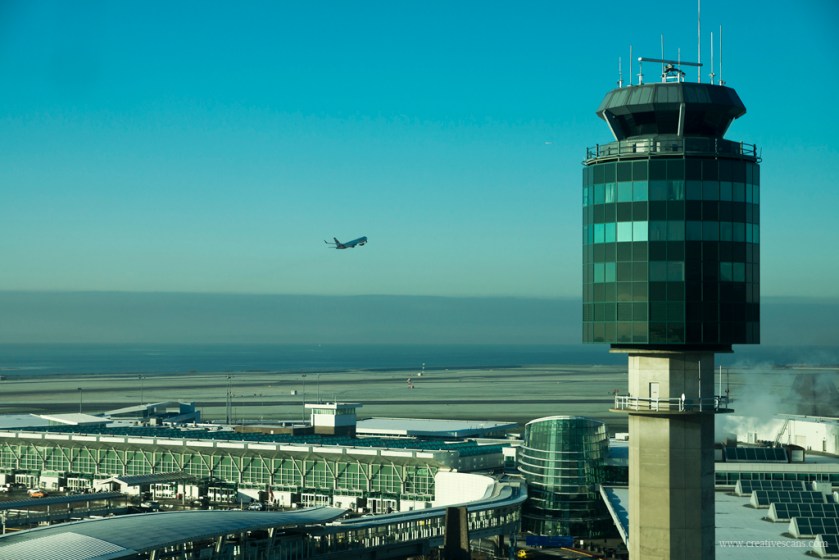
I am interested in all things aviation related. So as a self-confessed “Aviation Geek” or “Aviation Enthusiast” this is my first post of many about aviation related topics.

DSC01894s
A view of the control tower at YVR in Vancouver with an aircraft lifting off in the background.

I am interested in all things aviation related. So as a self-confessed “Aviation Geek” or “Aviation Enthusiast” this is my first post of many about aviation related topics.

I find it interesting and enjoyable to listen to ATC (air traffic control) with the ATC app on my iPhone (LiveATC) or listing on the internet at http://www.liveatc.net/.  The speed at which a lot of information is passed between air traffic controllers, pilots and ground service personnel can make your head spin. I usually listen to the controllers at YVR, but the app and website mentioned above lets people listen to airports around the world.

Different air traffic controllers are responsible for different operations in and around the airport as well as between airports. I will be writing more about the different ATC positions and responsibilities in the future.