YVR Snow Removal 2019

Photos of snow removal equipment in action at YVR.

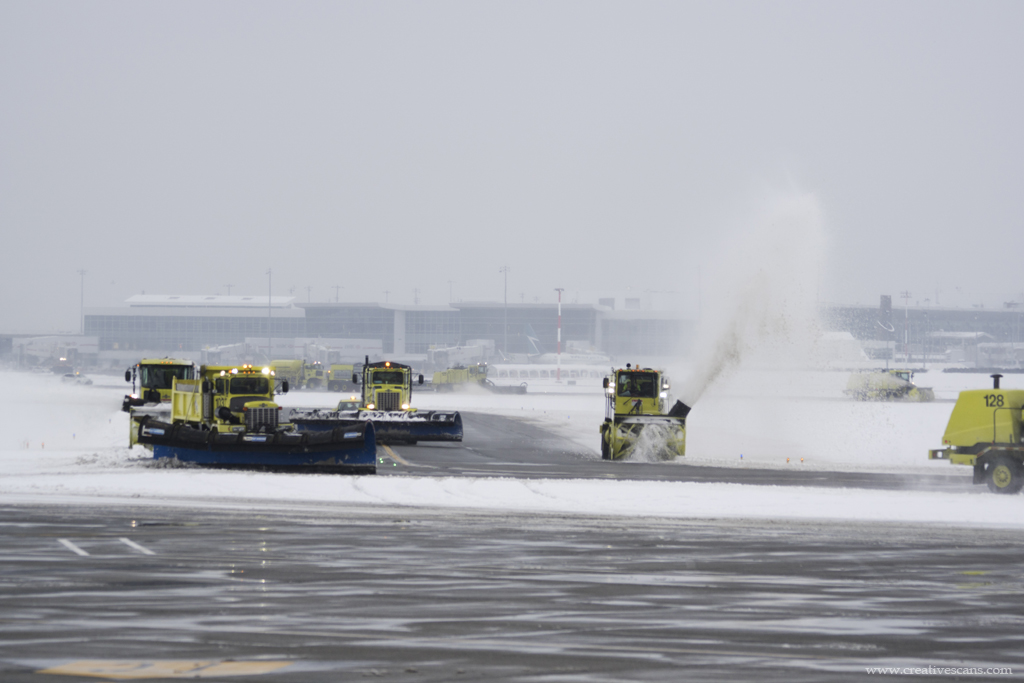
With the somewhat rare significant snowfall recently in the lower mainland I made my way out to YVR to capture some images of the snow removal operations at YVR.
YVR has some impressive machinery for snow removal which includes:
3 trucks capable of spreading solid and liquid materials to make sure the runways and taxiways do not freeze in cold winter conditions.
6 “Multi-Hogs” which can be equipped with a broom or a blower and or a chemical applicator.
5 Oshkosh P-Series/MB 4600 “All in One” trucks, that can each plough and sweep a 24 foot wide path on the airport runways and taxiways.
3 Oshkosh H-Series Sweepers that each have a 22 foot wide high speed broom attached.
5 Oshkosh H-Series Snow Blowers that can each launch 5,000 tons of snow 150 feet every hour. That is a combined capacity of 25,000 tons of snow being blown off runways and taxiways every hour!
3 Oshkosh P-Series Trucks that have a 24 foot wide high speed snow plough on the front end.

When a combination of this equipment is brought to bear to clear a runway or taxiway it is called an “echelon”. A full runway can be cleared in about 20 minutes.

The airport also has access to front end loaders and dump trucks to move and deposit collected snow to designated snow storage areas on the airport grounds.

Below are a few images of the various pieces of equipment in action during the recent snowfall. Click on a thumbnail to see a larger image.

Canadian Coast Guard – Keeping our waters safe

I recently attended an interesting presentation hosted by the Port of Vancouver at their Community Office in Delta.

The topic was “who is keeping our waters safe”. Guest speakers Geoffrey Denman, Search and Rescue Program Exercise and Liaison Officer and Art Statham, Superintendent, Marine Communication and Traffic Services, Western Region provided some really great information and stories about what goes into keeping our coastal waters safe. Some of the volunteers from Royal Canadian Marine Search and Rescue Station #8 Delta were on hand with a display as well.

There is a lot going on in and around our marine environment to keep people, wildlife and property safe. There are boats and aircraft that patrol our waters looking for problems and performing search and rescue operations. Then there is all the radio communications between the marine traffic centre in Victoria and vessels using our waters to keep traffic moving smoothly and to help facilitate search and rescue. This is in addition to the work done to maintain buoys, navigation equipment, community outreach and providing boating safety education to schools, yacht clubs and the general public.

Did you know?

  • There are 27 manned light stations along the BC coast.
  • Delta Station 8 is responsible for 450 square miles of BC waters
  • The Canadian Coast Guard has responsibilities that reach out past the 12 nautical mile mark (territorial waters) to the 200 nautical mile mark (Exclusive Economic Zone).
  • The Canadian Coast Guard saves an average of 10 lives per day

More information about the Canadian Coast Guard is available at their website:

http://www.ccg-gcc.gc.ca/eng/CCG/Home

More information about Royal Canadian Marine Search and Rescue Station #8 Delta:

http://rcmsar.com/rescue-stations/southern-region/delta/

More information about the Port of Vancouver:

http://www.portvancouver.com/

cg2s
Art Statham, Superintendent, Marine Communication and Traffic Services, Western Region

cg3s
Geoffrey Denman, Search and Rescue Program Exercise and Liaison Office

15268528959_d85c69b64e_o
The Dash-8 that is part of the Spill Prevention: National Aerial Surveillance Program

14787743602_26c5b37c8b_o
The Dash-8 that is part of the Spill Prevention: National Aerial Surveillance Program

SONY DSC
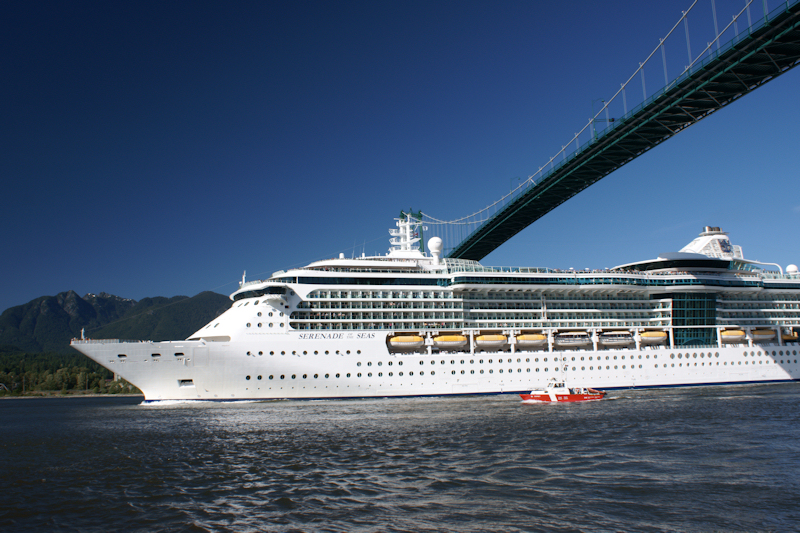
Coast Guard provides security for cruise ships
 
8693542741_d9222a3f15_o
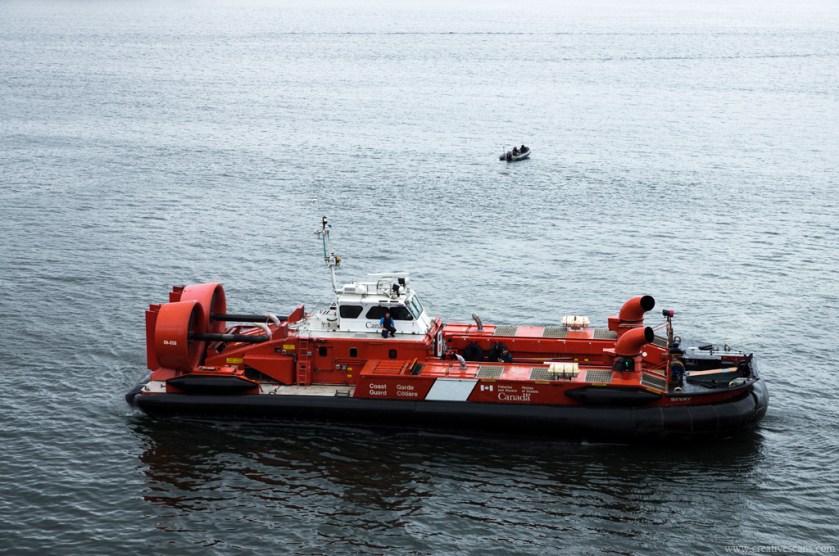
Coast Guard hovercraft

SONY DSC
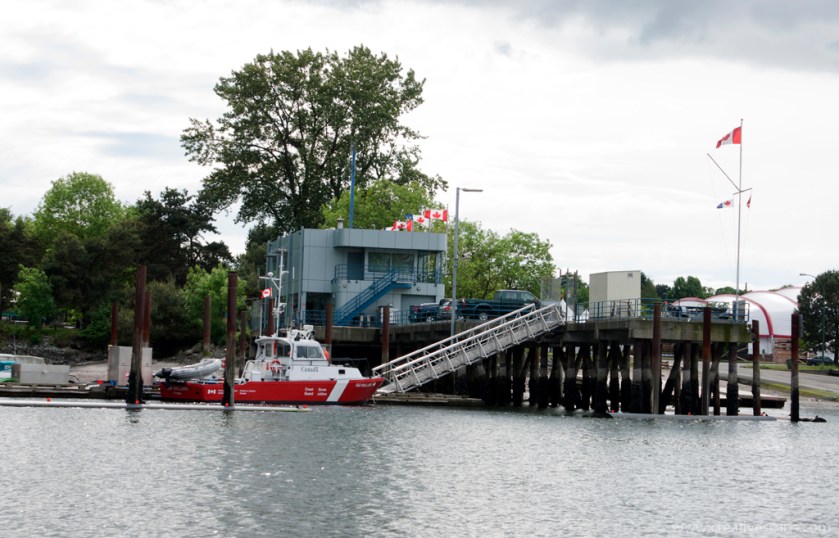
Coast Guard base Kitsilano BC

Gord Downie’s hats…

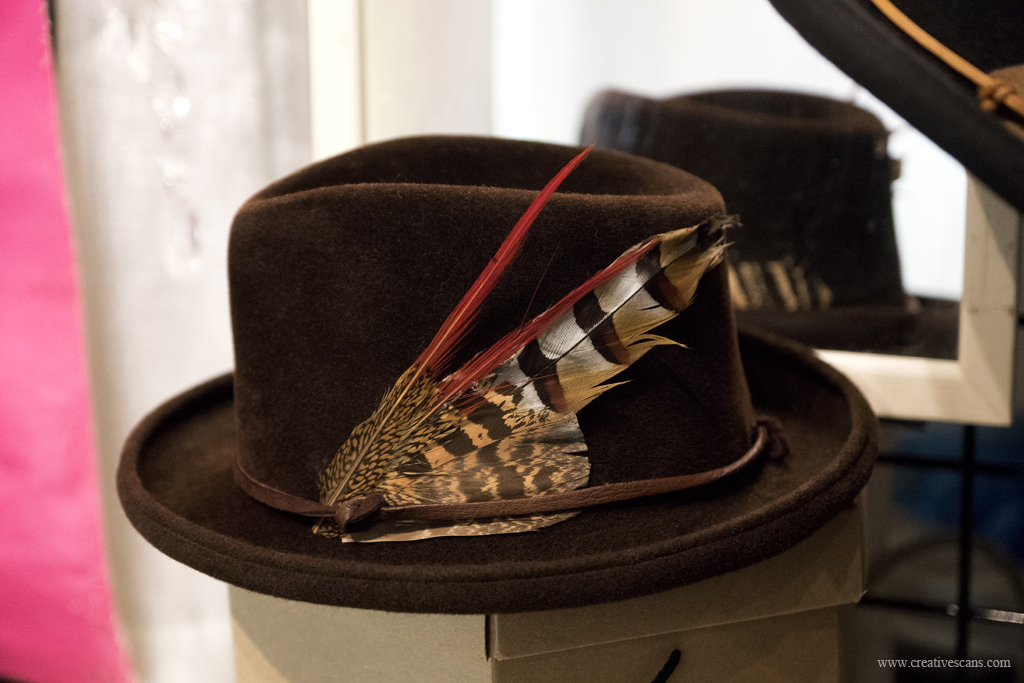
While at the Circle Craft Winter Market at the Vancouver Convention Center I had the pleasure of meeting and spending a few minutes chatting with Karyn Ruiz of Lilliput Hats. She designed and made the hats Gord Downie of The Tragically Hip wore on stage during the Man Machine Poem tour.

dsc01235s2
Karyn Ruiz of Lilliput Hats
I have been a fan of The Tragically Hip for many years and was lucky enough to see them live in Vancouver on their Man Machine Poem tour. Seeing them in concert was both amazing and sad…amazing because hey it’s “The Hip”, sad because of Downie’s terminal health issues and this would be their last tour. I have very fond memories of that concert. And a major part of those memories are the bright outfits and very cool hats Downie was wearing during that concert. To meet and speak with someone who had a hand in creating those memories is very cool.

When asked what it was like to meet Gord Downie, who is to a lot of people, a Canadian icon, she said he was just a normal quiet man who was quite involved in the creative process of designing the hats.

She told me 6 hats were made for Gord to wear on stage during the tour with another two hats made to be auctioned off. And she mentioned how she printed some of the lyrics of two Tragically Hip songs into two different hats she made for Downie. The two songs were “Bobcaygeon” and “Done and Done”. Downie was surprised and really happy with that detail. How cool is that!

The auction was in support of the “Gord Downie & Chanie Wenjack Fund at Toronto Foundation”, “Gord Downie Secret Path Fund for Truth and Reconciliation at The National Centre for Truth and Reconciliation (NCTR) at The University of Manitoba” and “Gord Downie Fund for Brain Cancer Research at Sunnybrook Health Sciences Centre”. The website with more information is https://www.courageforgord.org/ The website has a page where donations can be made and a gift shop as well. All proceed from the site support the above funds.

While we chatted she showed me some photos taken when she met with Downie at her shop and there were photos of him on stage wearing the hats she created.

It really was interesting to meet and spend a few minutes talking with Karyn. Maybe it’s time for me to upgrade from wearing ball caps to something custom made and a lot more stylish.

Below are a few cell phone images from the Tragically Hip concert in Vancouver BC, July 26, 2016.


Let it ride…

I received the post season summary and accounting from my horse racing club manager. After all expenses, the club made a bit of money with our two horses Merlot and Shooting Jacket. Since I made my original money back and a bit extra I have decided to be an owner again next season. I will have both horses, Merlot and Shooting Jacket, again next season.

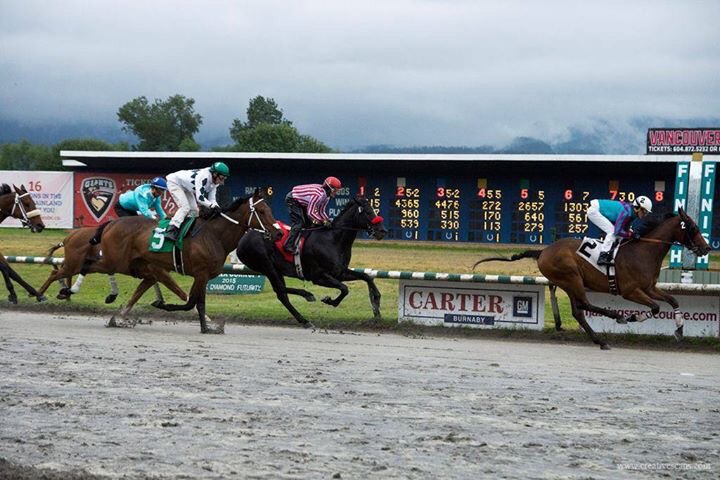
Merlot placing 2nd in a race at Hastings Racecourse 2016
Shooting Jacket finishing 1st in a race at Hastings Racecourse 2016

Horse racing season almost finished..

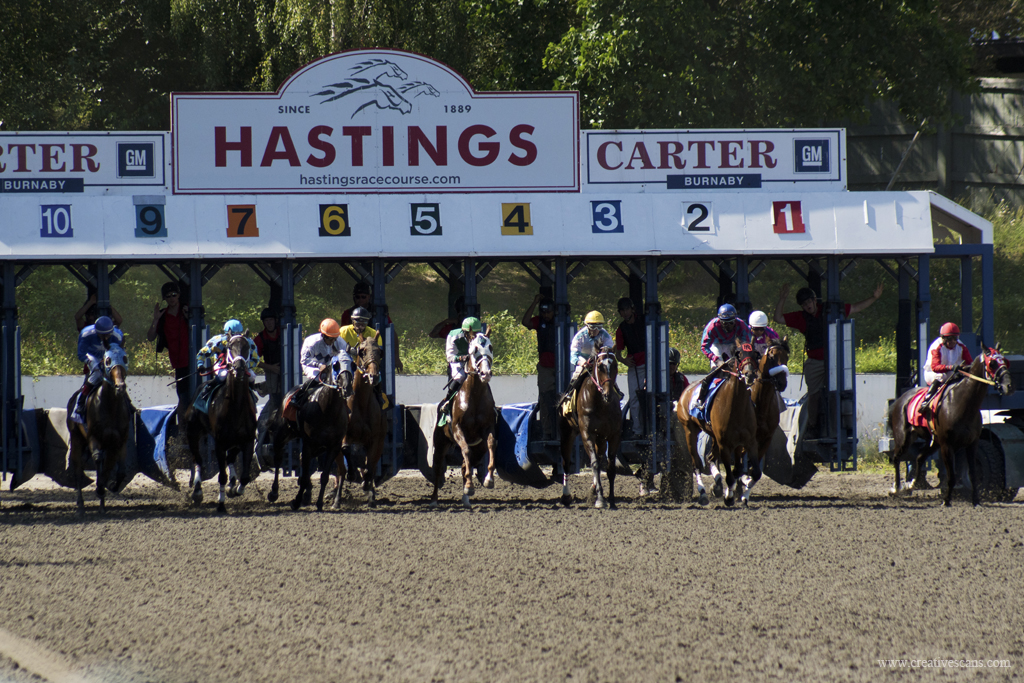
My two thoroughbred race horses, Shooting Jacket and Merlot, are finished racing at Hastings Racecourse for this season. They are wintering in Aldergrove, BC. Merlot will be back in 2017 but not sure about Shooting Jacket.

Shooting Jacket had 9 starts. Finished first twice, second three times and third twice. Finishing top 3 in 7 of 9 starts. Pretty good if you ask me.

Merlot had 9 starts. Finished first once, second three times and third four times. Finished top 3 in 8 of 9 starts. Again, pretty good if you ask me.

It was a lot of fun being a race horse owner. Seeing a bit of what happens behind the scenes, talking with jockeys and trainers, visiting the paddock area and getting into the winners circle a few times was a lot of fun. I am not sure if I will sign up as an owner again next season but I have a few weeks to make that decision and will let you know what I decide to do going forward.

YVR 2037 Master Plan Workshop

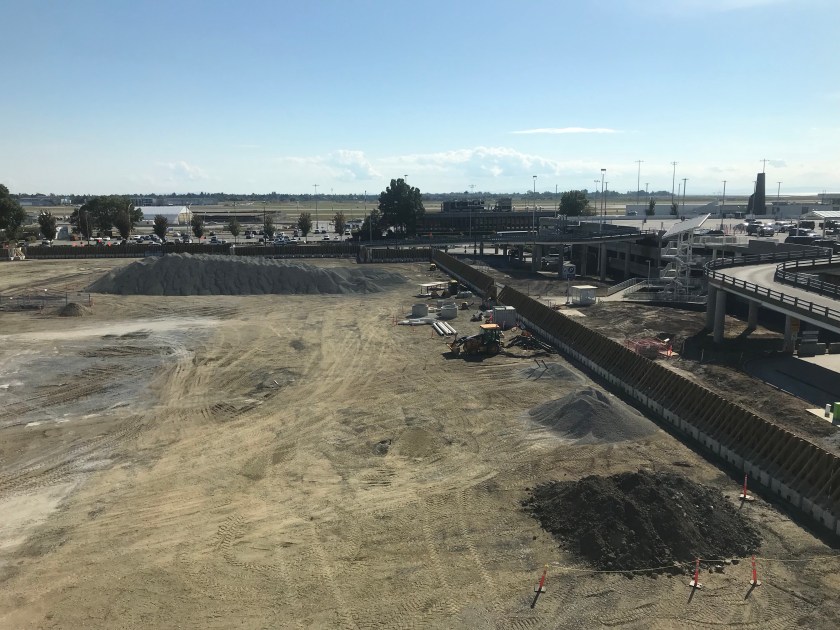
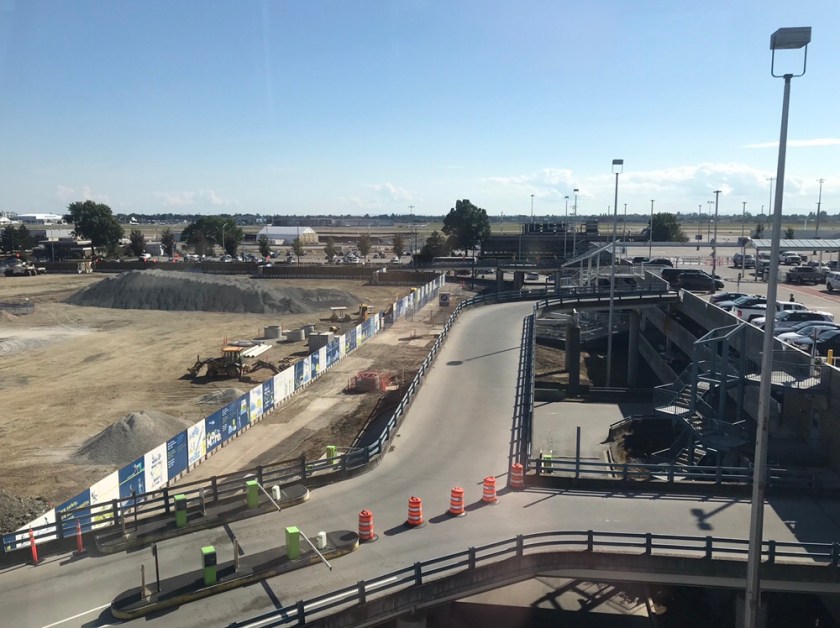
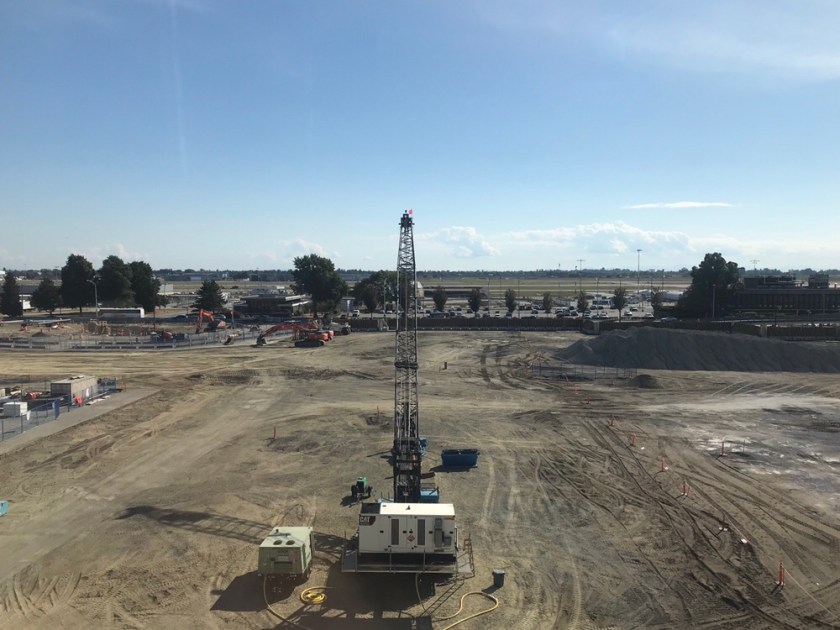
I recently attended the first of three YVR 2037 Master Plan Workshops at YVR. I view the 2037 Master Plan mainly from a plane spotter/aviation enthusiast point of view with an interest in the airport providing more plane spotting amenities. Here are a few thoughts:

The YVR Master Plan and workshops cover more than just plane spotting. They cover 6 key components; terminals, airside and airspace, ground access, environmental, amenities and land use. Creating new plane spotting areas touches on several of these areas. The airport had many top level people at the session actively involved in the discussions including Craig Richmond CEO of the airport, as well as people in charge of or with solid knowledge in the above 6 key areas. There were about 6 groups of a half dozen or so people in each group participating in the workshop. If we had questions, most if not all, got answered. If questions couldn’t be answered on the spot they would follow up at a later time. No concrete time lines are in place for any of the topics covered. These are sessions to discuss ideas for the near and medium future and give feedback about current and future aspects of the airport. The discussion guide is an interesting document to read. It can be found here:

http://www.yvr2037.ca/our-futurist/documents/3856/download

Plane spotting is specifically mentioned on page 27:

“Plane Spotting Platform: Design and construct a viewing area, just west of the Canada Post building, including parking, path and a covered plane spotting deck.”

And here:

“Plane Spotting Platform: Design and construct a plane spotting platform in the grassy area just north of the jetSet parking lot and west of the future North-South Taxiway.”

When plane spotting was brought up in our group here is some of what was brought up:

Provide a shuttle or some other means of transport to get to and from the spotting locations. Dedicated shuttle similar to the south terminal shuttle, or transit or maybe partner with the Canada Post Shuttle (that runs almost empty most parts of the day).

Connect spotting locations with bicycle paths and other Sea Island amenities.

Make the spotting locations camera friendly (no chain link fencing or glass to shoot through)

Have a covered area included in the spotting location.

Include toilet facilities at the spotting locations.

Put in a sidewalk to Larry Berg Flight Path Park from BCIT.

There is another opportunity to get involved and learn more about the future at the airport at the upcoming open house on Wednesday October 12, from 4pm to 8pm. It is being held at the Observation Area in the Domestic Terminal at YVR.

It was an interesting event to attend. Below are a few photos taken at the event. And here is a link so some of my aviation related images: https://www.flickr.com/photos/zorro1968/albums/72157646707011000

Watched Shooting Jacket workout…

Watched Shooting Jacket workout…

I went to Hastings Racecourse early Wednesday morning to watch one of my two horses, Shooting Jacket, workout. Trackside, the smell of coffee and hay were in the air along with the occasional whiff of horse poop. When you are this close to the action you get all the sights and smells. There were more owners horses trainers and agents of different horses at this workout session compared to the last session I attended a few weeks back. Everyone seems to know everyone and is very friendly. I am still getting to know people but it’s all good.

Shooting Jacket ran a few slow laps or parts of laps around the track, then did at least one flying lap at a good clip. Then it was back into the paddock and barns and the word is he is in good shape. I think Shooting Jacket and Merlot are both running on Canada Day but need to confirm that.

Below are a few photos of Shooting Jacket working out Wednesday morning. This was the first time using the new Sony A77ii at the track. It was a good real world test to help me get used to the new equipment and I am fairly happy with these early images..

For more on how I got involved with horse racing check my previous post here:

https://creativescans.wordpress.com/2016/05/24/so-i-bought-a-race-horse/

For more information about Hastings Racecourse visit their website:

http://www.hastingsracecourse.com

Fraser River Marine Pilots…

I attended a really interesting presentation at the Port of Vancouver’s Delta Community Office given by Captain Mike Armstrong, who has been a Fraser River Pilot for 15 years and is one of only 8 Fraser River Pilots that work the Fraser River. There are two types of marine pilots, Coastal and River, both guide ships through local waters to and from a port. Captain Mike talked about many different aspects of becoming and being a Fraser River pilot…

To become a pilot, either River or Coastal is not easy. You first need a lot of experience on the waters in which you hope to work before you can even apply to become a marine pilot. Then there is the extensive 3 part testing program that must be completed. The testing consists of a written general knowledge test, a written local knowledge test and then an extensive oral exam. You must pass (70%+) each of the tests before moving on to the next test…fail one and you do not move on to the next. To pass the local knowledge test you must memorize, among other things the locations of markers and buoys, depth of water at various places along the river, height of bridges, width of channels and a lot more. There is also on the job training and mentoring that must be completed before becoming a full on River or Coastal Pilot.

People wishing to becoming marine pilots often start their career on the water working on fishing boats, ferries, tug boats, deep sea vessels or with the coast guard. Because it takes so long to gain the necessary experience to become a marine pilot you won’t find too many really young marine pilots. And because it takes so much experience in either River or Coastal waters to become a River or Coastal Pilot it is very rare for a pilot to work in both areas or switch from one area to the other.

When a ship needs to move up the Fraser River from the ocean, the Pilot boards the ship about 7 miles off shore and about 3 miles outside the mouth of the river. This gives the Coastal Pilot who guided the ship through the outer local waters of the BC coast, the River Pilot and Captain of the ship time to brief each other before starting the passage up the river. The Coastal Pilot then leaves the ship while the River Pilot remains on board and takes over navigation of the ship. When the ship leaves port the process is reversed.

Getting on and off a ship in open water in all weather conditions and at all times of the day or night is probably the most dangerous hazard a marine pilot faces. I know off the coast of Oregon at the mouth of the Columbia River they will use a helicopter to transfer a marine pilot to or from a ship if the weather is too bad for a water based transfer.  There is some talk of a helicopter being used along the BC coast to transfer pilots to and from ships when needed in the future. Right now if the waters are too rough to transfer a pilot off a ship that is leaving the BC coast, that pilot will try and get off the ship around Victoria on Vancouver Island. If getting off the ship is still not possible due to bad weather the pilot stays on board that ship until its next port of call…no matter where in the world that might be.

Some other interesting things I learned about being a Marine Pilot:

No tax dollars are used to pay for piloting services, it is all paid for by the ships using the services.

When a pilot first starts working they do not start with the very largest ships. The size of ships they are allowed to pilot will increase over about a 5 year period.

It is the pilot who orders the tugs used to help guide the large ships in and out of port. The pilot figures out in advance what type and how many tugs will be needed for a particular job.

Pilots are consulted before a new bridge or dock is built and can provide valuable feedback on how a bridge or dock should be designed.

Sometimes 2 pilots are on board a ship if it is a particularly challenging assignment.

The Fraser River is surveyed constantly to monitor the depth of the river. This information is made available to stakeholders including marine pilots on a daily basis.

There is a lot more to being a Marine Pilot and their roles and responsibilities than I have covered here. If you would like more information you can find it at:

The Fraser River Pilots website:

http://www.fraserpilots.com/

The Canadian Marine Pilots’ Association website:

http://www.marinepilots.ca/index.html

The International Maritime Pilots’ Association:

http://www.impahq.org/

More information about the Port of Vancouver

http://www.portvancouver.com/